

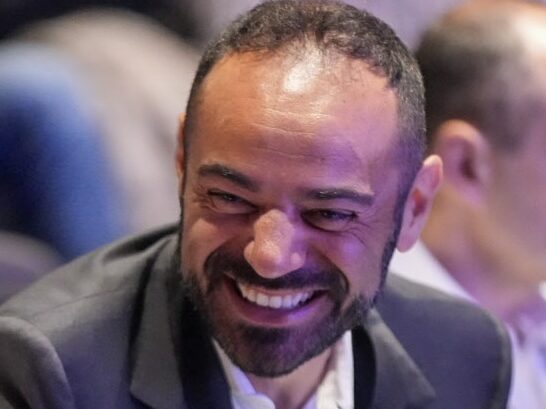
Antonio, please introduce yourself.
I am Antonio Novellino, the Smart City Market Line Manager, working in ETT | DEDAGroup
Tell us about your professional and academic career before becoming part of the OCEAN ICE community.
Before becoming part of the OCEAN ICE community, I built a multidisciplinary academic and professional career at the intersection of engineering, data science, and ocean observing. I hold a PhD in Biotechnology and Bioengineering and a MSc in Biomedical Engineering, with certified expertise in data science and FAIR data management. Over the past decade, I have focused on marine data infrastructures, leading the coordination of EMODnet Physics, a thematic service of the European Marine Observation and Data Network that provides open and free in-situ ocean physical data and products under common standards, supporting broad scientific and operational use across European and global observing systems. My work in EMODnet includes designing interoperable data management services that facilitate data discovery, integration, and machine-to-machine access, furthering principles of accessibility, interoperability, and reuse. I have served on the EMODnet Steering Committee and contributed to several technical working groups, and I am co-chair of the South Ocean Observing System (SOOS) Data Management Steering Committee (DMSC), which aims to unlock and enhance access to Antarctic and Southern Ocean data for the global research community. In addition, I have been actively involved in key polar and ocean observing projects such as SO-CHIC, OCEAN ICE, POLARIN, and OBSSEA4CLIM, where I have contributed to data strategy, management frameworks and training efforts that support improved data sharing, climate research, and community engagement.
What do you do within OCEAN ICE?
Within OCEAN ICE, I coordinate Work Package 7 (WP7 – Data Management), leading the design and implementation of the project’s data management strategy, workflows and infrastructure to support all scientific and technical activities across WP1–WP6. WP7 ensures that in-situ and observational data produced by the project are collected, organized, documented and delivered in compliance with FAIR (Findable, Accessible, Interoperable, Reusable), and are interoperable with OCEAN ICE key stakeholders: SOOS, EMODnet, the Copernicus Marine Service, etc. to maximise accessibility and reuse by the broader research community. WP7 builds on the legacy of SO-CHIC (and other Southern Ocean research projects), advancing open science practices, while integrating with common standards and tools for data dissemination, metadata harmonisation and catalogue services. My work involves coordinating with WP leads and stakeholders to manage the flow of data, ensuring interoperability, supporting OCEAN ICE and SOOSmap within global observing and modelling frameworks.
What have you enjoyed about OCEAN ICE so far?
What I’ve enjoyed about OCEAN ICE so far is the combination of strong scientific ambition and a truly collaborative spirit. Scientifically, the project tackles complex and highly relevant questions around ocean–ice interactions in the Southern Ocean, and it’s exciting to see how the integration of in-situ observations, modelling efforts, and process studies is generating insights that are both innovative and policy-relevant. There’s something very motivating about contributing to work that improves our understanding of climate-critical regions and helps understanding some key processes that regulates our planet.
At the same time, the team dynamic has been one of the most rewarding aspects. OCEAN ICE brings together experts from different disciplines — oceanographers, sea-ice specialists, modellers, data scientists, and others — and that diversity creates a stimulating environment where ideas move quickly and you are constantly learning from colleagues who are, by the way, leading international scientists in their fields. As I often say, being in charge of data management puts me in close contact with most of the scientific components of the project, and I have the fortune of learning about new topics and new findings almost every day
Tell us about a skill or trait unique to you that you would like to share?
Thanks to my background bridging engineering, data science, and marine observing systems, I tend to see connections where others see complexity or tedious tasks. I enjoy building bridges between data producers and data users, ensuring that the invisible infrastructure works smoothly in the background while enabling impactful science.
Stay tuned on our social media channels (X, Mastodon, LinkedIn and Bluesky) for more of the series of OCEAN ICE 'Researcher in the Spotlight' articles.